YSG-400 Double-Head Stone Calibrating Machine
YSG-400 Stone Calibrating Machine provides uniform thickness for marble, stone mosaic, natural stone and ceramic slabs. Choose 400 mm or 600 mm width.
Product introduction
Uniform thickness calibration for marble, stone mosaic, natural stone and ceramic slabs before polishing.
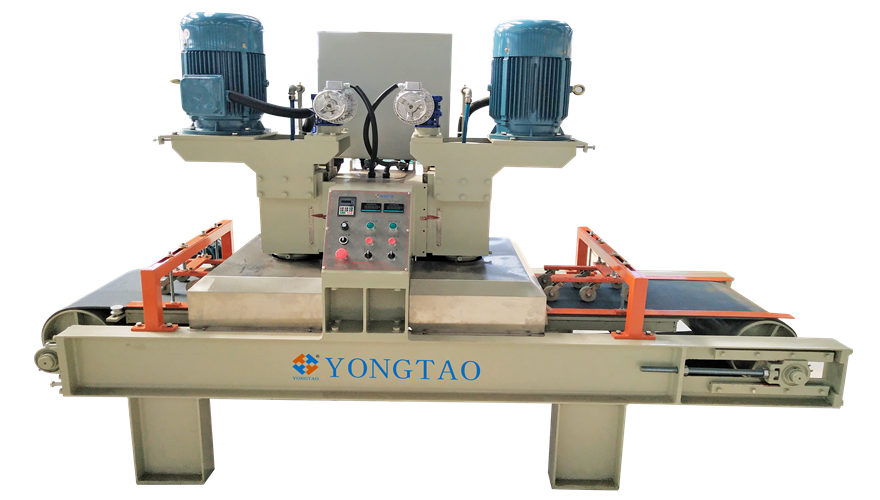
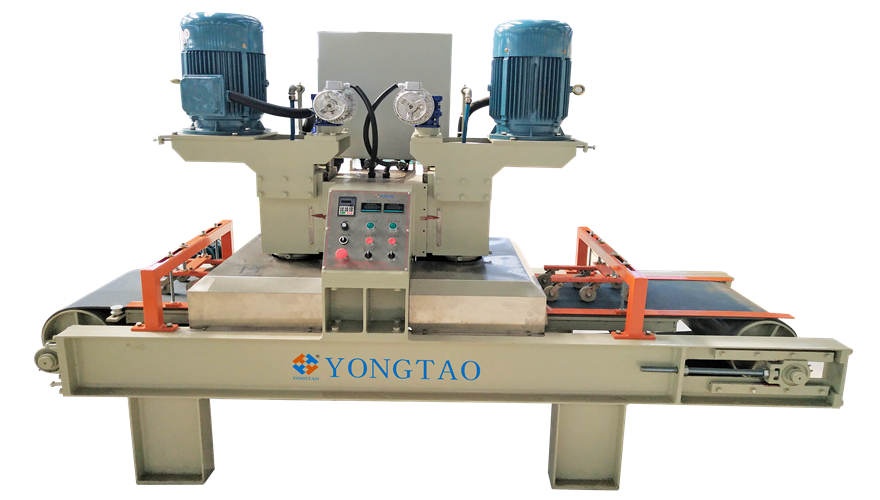
The YSG-400 Stone Calibrating Machine is designed to calibrate slabs to a more uniform thickness and prepare a stable surface for subsequent processing. It uses two calibrating heads arranged above a continuous conveyor belt: the first head removes the main thickness allowance, while the second head performs finer calibration.
Yongtao offers 400 mm and 600 mm processing-width configurations for different material sizes. The machine is suitable for marble, natural stone, ceramic slabs and stone mosaic materials with a processing thickness of 10–50 mm. Adjustable side guides, continuous feeding and independent calibration stages make it suitable for workshops that require stable and repeatable thickness preparation.
Quick Answer
The YSG-400 is a Double-Head Stone Calibrating Machine used to reduce thickness variation in marble, stone mosaic, natural stone and ceramic slabs. Material travels continuously beneath two calibrating heads. The first head performs the main material removal, and the second head completes a finer pass. The result is a more uniform slab thickness and a flatter surface for subsequent polishing.
What Is a Stone Calibrating Machine?
A Stone Calibrating Machine removes controlled amounts of material from the upper surface of a slab. Its primary purpose is to reduce thickness differences and establish a more consistent reference surface.
Slabs produced by previous processing stages may have high areas or variations between different positions. If these differences are not corrected, the material may enter polishing with an uneven surface. This can cause inconsistent tool contact and make the final processing result more difficult to control.
The YSG-400 works as a stone slab thickness calibrating machine by combining continuous conveyor feeding with two consecutive calibration stages. It is particularly useful when multiple slabs or mosaic materials must be prepared to a consistent thickness range.
How the Double-Head Calibration System Works
Material Loading and Width Adjustment
The operator places the slab on the conveyor belt and adjusts the limiting guides on both sides according to the material width. The guides help keep the workpiece in a stable feeding position as it moves through the machine.
Before production begins, the operator should confirm that the material width and thickness are within the selected machine configuration.
First-Head Thickness Removal
The first calibrating head removes the main portion of the excess material. This stage performs the primary thickness correction and reduces high areas on the upper surface.
The removal amount should be selected according to the initial slab condition, required finished thickness, material characteristics and grinding-wheel configuration.
Second-Head Fine Calibration
The second calibrating head performs another controlled pass using a finer grinding configuration. This stage refines the result produced by the first head and helps improve thickness consistency across the workpiece.
Dividing material removal between two heads provides a more progressive process than requiring one head to remove the full allowance in a single stage.
Continuous Material Discharge
After passing beneath both heads, the calibrated material exits through the conveyor. The operator can then measure the outgoing thickness and compare it with the required value.
If necessary, the head position or conveyor speed can be adjusted before continuous production begins.
YSG-400 Stone Calibrating Machine Working Video
Watch the YSG-400 Stone Calibrating Machine perform continuous feeding and two-stage thickness calibration. The video shows how the first and second calibrating heads work in sequence to prepare marble, stone mosaic, natural stone and ceramic slabs for subsequent processing.
Main Features and Benefits
Two Consecutive Calibration Stages
The first head carries out primary material removal, while the second head performs finer calibration. This two-stage structure supports more controlled thickness preparation.
Uniform Thickness Preparation
The machine helps reduce differences between high and low areas on the slab. A more uniform thickness provides a better starting condition for subsequent polishing.
Continuous Conveyor Feeding
The conveyor moves the material through both calibration stages without repeated manual repositioning. This makes the YSG-400 suitable as a continuous-feed stone calibrating machine for regular workshop production.
Adjustable Side Guides
The limiting devices on both sides can be adjusted according to the material width. Correct guide positioning helps maintain a stable feeding path without restricting movement.
Two Processing-Width Options
The 400 mm stone calibrating machine is designed for materials up to 400 mm wide. The 600 mm stone calibrating machine provides additional width for workpieces up to 600 mm.
Simple Operating Structure
Once the material size, head position, side guides and conveyor speed have been set correctly, the machine provides a straightforward operating process. Representative test material should always be used before batch production.
Suitable Materials and Applications
Marble Slabs
Used as a Marble Calibrating Machine, the YSG-400 prepares marble slabs that require more consistent thickness before polishing. It is suitable for small-format materials and workshop applications within the specified processing range.
The marble slab calibrating machine should be configured according to the original slab condition, required removal amount and desired outgoing thickness.
Marble Mosaic Materials
As a marble mosaic calibrating machine, the YSG-400 can prepare marble materials before mosaic polishing. More consistent thickness helps provide stable material conditions for later processing.
For small-format applications, the machine can also be used as a small stone slab calibrating machine, provided the workpiece can be fed and supported safely on the conveyor.
Natural Stone Materials
The YSG-400 can operate as a natural stone calibrating machine for compatible materials within its width and thickness range. Because natural materials may contain variations, veins, filled areas or weak sections, representative samples should be tested before continuous production.
Ceramic Slabs
The machine may also be configured as a ceramic slab calibrating machine for compatible ceramic materials. Grinding-wheel selection, removal amount and conveyor speed must be matched to the characteristics of the slab.
Stone Mosaic Processing
As a Mosaic Stone Calibrating Machine, the YSG-400 is intended for thickness preparation before mosaic polishing or other finishing stages. It can help reduce thickness differences between incoming materials and improve consistency during later processing.
400 mm and 600 mm Model Selection
Choose the 400 mm configuration when the maximum workpiece width does not exceed 400 mm. Choose the 600 mm configuration when wider materials must be processed.
Model selection should be based on the widest actual workpiece rather than the average material width. Installation space, water supply, electrical requirements and expected output should also be confirmed before ordering.
Technical Specifications
| Specification | Parameter |
|---|---|
| Number of calibrating heads | 2 |
| Calibrating-head diameter | 500 mm for 400 mm model; 700 mm for 600 mm model |
| Calibrating-head motor power | 11 kW × 2 |
| Conveyor-belt width | 500 mm for 400 mm model; 700 mm for 600 mm model |
| Processing width | 400 mm or 600 mm |
| Processing thickness | 10–50 mm |
| Processing speed | 0.5–2.5 m/min |
| Listed electrical consumption | 19 kW |
| Water consumption | 490 L/min |
| Total installed power | 26 kW |
| Machine dimensions | 3000 × 1800 × 1700 mm |
| Machine weight | Approximately 2000 kg |
The specifications above describe the current standard configuration. Final parameters may vary according to model configuration, electrical standard and project requirements. Confirm all technical data with Yongtao before production or ordering.
Product Data and Verification
The specifications on this page are based on the standard 400 mm and 600 mm configurations supplied by Yongtao Machinery. Actual results depend on the material, incoming thickness variation, grinding-wheel specification, removal allowance and conveyor setting. Buyers should provide representative material details or samples so the final machine configuration can be verified before production.
Stone Calibration and Polishing: What Is the Difference?
Stone calibration and polishing are related but different processes.
Calibration controls thickness and improves surface level by removing excess material from high areas. Polishing uses progressively finer grinding tools to develop the required surface quality or gloss.
The second head of the YSG-400 performs finer calibration and can leave a smoother prepared surface, but it does not replace a complete polishing process when a finished decorative surface is required.
For this reason, the YSG-400 is commonly used as a stone calibrating machine before mosaic polishing. Calibration creates a more consistent material condition, while the subsequent polishing stage produces the required surface finish.
Recommended Calibration Procedure
Measure the incoming slab thickness at several positions.
Confirm that the width and thickness are within the machine’s processing range.
Determine the required outgoing thickness and calculate the approximate removal allowance.
Select a grinding-wheel configuration suitable for the material.
Adjust the side guides according to the workpiece width.
Set the first and second calibrating-head positions.
Select an appropriate conveyor speed for the initial test.
Process one representative sample before batch production.
Measure the outgoing thickness at the same reference positions.
Adjust the head position or conveyor speed when necessary.
Confirm cooling-water flow before continuous operation.
Inspect grinding-wheel condition and thickness results regularly.
The correct settings depend on material characteristics, original flatness, incoming thickness variation, required removal amount and grinding-wheel condition. A controlled test is more reliable than applying the same settings to every material.
Quality Checks Before Continuous Production
Incoming Thickness
Measure several points across the material rather than checking only one position. This helps identify the actual thickness variation before calibration.
Outgoing Thickness
Measure the corresponding points after the material passes beneath both heads. Compare the result with the required finished thickness.
Surface Condition
Check whether the material has been calibrated evenly and whether there are visible areas of excessive or insufficient removal.
Feeding Stability
Observe whether the material remains properly positioned between the side guides and travels smoothly along the conveyor.
Grinding-Wheel Condition
Worn or unsuitable grinding wheels can affect removal consistency. Inspect the wheels regularly and replace or adjust them when necessary.
Information Required for Machine Selection
To recommend the correct configuration, provide the following information:
Material type
Maximum workpiece width
Minimum and maximum workpiece thickness
Incoming thickness variation
Required finished thickness
Approximate removal allowance
Expected daily output
Local voltage and frequency
Photos or samples of the material
These details help determine whether the 400 mm or 600 mm configuration is more suitable. When the material has unusual characteristics or substantial thickness variation, sample testing is recommended.
Why Choose the YSG-400?
The YSG-400 combines two-head calibration, continuous feeding and adjustable width control in a compact configuration for small and medium-width materials.
It is designed for users who need:
More uniform slab thickness
Progressive material removal
Stable conveyor feeding
400 mm or 600 mm processing options
Preparation before mosaic polishing
Compatibility with different qualified slab materials
Straightforward adjustment and operation
Yongtao Machinery can evaluate material dimensions, required finished thickness and expected production needs before recommending the appropriate configuration.
Frequently Asked Questions
What does a stone calibrating machine do?
A Stone Calibrating Machine removes controlled amounts of material from the upper surface of a slab. Its purpose is to reduce thickness variation and create a more consistent surface before polishing or other subsequent processing.
Why does the YSG-400 use two calibrating heads?
The first head performs the main material removal, while the second head completes a finer calibration pass. This arrangement divides the required removal between two consecutive stages and supports more controlled thickness preparation.
What materials can the machine process?
The YSG-400 is designed for compatible marble, natural stone, ceramic slabs and stone mosaic materials within the specified width and thickness range. Final suitability depends on material characteristics, grinding-wheel selection and required removal amount.
Is calibration required before mosaic polishing?
Calibration is recommended when the incoming material has inconsistent thickness or an uneven reference surface. Correcting those differences gives the subsequent polishing process more consistent material conditions.
What is the difference between stone calibration and polishing?
Calibration primarily controls slab thickness and surface level. Polishing progressively refines the surface to produce the required finish or gloss. Calibration generally takes place before polishing.
How do I choose between the 400 mm and 600 mm models?
Choose according to the maximum workpiece width. The 400 mm model processes materials up to 400 mm wide, while the 600 mm model processes materials up to 600 mm wide. Installation conditions and expected output should also be considered.
Can the machine make every slab the same thickness in one pass?
The result depends on incoming thickness variation, material condition, required removal amount, head settings, conveyor speed and grinding-wheel condition. A representative test should be completed before continuous production. Materials with substantial variation may require additional adjustment or another pass.
Is the YSG-400 an automatic stone calibrating machine?
The YSG-400 uses continuous conveyor feeding and two consecutive calibrating heads to perform the main processing sequence. Operators are still responsible for material loading, guide adjustment, parameter setting, result measurement and routine inspection.
Yongtao Machinery Support
Yongtao Machinery provides model selection, configuration evaluation and processing guidance for the YSG-400 Double-Head Stone Calibrating Machine.
Customers can provide material specifications, sample dimensions, incoming thickness variation, required finished thickness and expected output for technical evaluation. Yongtao can then recommend the appropriate 400 mm or 600 mm configuration and confirm the relevant installation requirements.
Technical Review and Page Information
Technical review: This page was reviewed by the Yongtao Machinery Technical Team for product configuration, operating principles, material suitability, model selection and technical specifications. Final processing results should be verified using the actual material, incoming thickness variation, grinding-wheel configuration and required removal allowance.
Reviewer: Yongtao Machinery Technical Team
Last updated: August 4, 2026
Machine specifications
| 400 mm Model | 600 mm Model |
|---|---|
| 400 mm | 600 mm |
| 500 mm | 700 mm |
| 500 mm | 700 mm |
| 2 | 2 |
| 10–50 mm | 10–50 mm |
| Materials up to 400 mm wide | Materials up to 600 mm wide |
Technical data reflects the legacy product record. Confirm voltage, options and final configuration with the approved quotation.
Bring the material. We’ll plan the process.
Send your material, maximum dimensions and production target. We will help you confirm the suitable machine configuration.