YTMDY-800 5-Head Small Tile Bullnose Machine
Explore the YTMDY-800 5-head small tile bullnose machine for 80–800 mm ceramic tiles, with chamfering, R10 forming and customizable finishing heads.
Product introduction
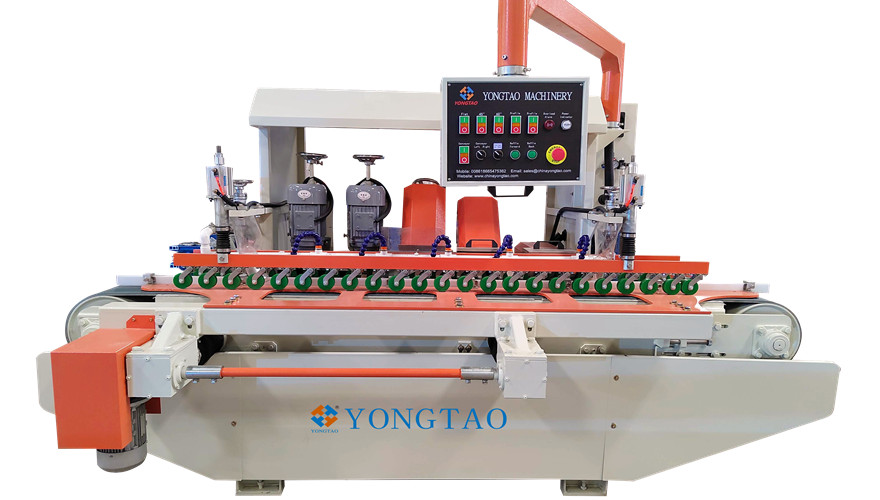
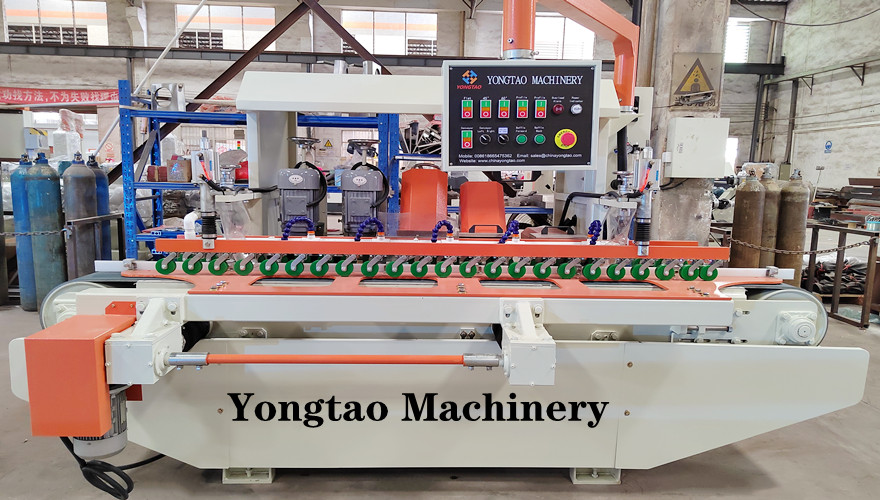
The YTMDY-800 5-head small tile bullnose machine is a compact edge-processing solution developed for ceramic tile factories with smaller production volumes and straightforward edge-forming requirements. It combines one edge-calibration head, two chamfering heads and two R10 profile-forming heads in a machine measuring 3000 × 1500 × 1200 mm.
The standard machine processes ceramic tile workpieces from 80 to 800 mm wide and 10 to 20 mm thick. Its conveyor operates at an adjustable speed of 1–3 m/min, allowing the processing conditions to be matched to the tile body, edge condition and required profile.
Unlike larger configurations with a long progressive polishing section, the YTMDY-800 focuses on edge preparation, chamfering and R10 bullnose forming. Its compact structure, five manually adjustable processing motors and accessible controls make it suitable for workshops that need practical small-batch production without installing a larger multi-head system.
Quick Answer: What Is the YTMDY-800 Used For?
The YTMDY-800 small tile bullnose machine is used to calibrate, chamfer and form R10 rounded edges on ceramic tiles. This 5-head ceramic tile bullnose machine uses one head for edge calibration, two heads for chamfering and two heads for R10 bullnose profile forming.
The standard two forming heads use diamond profile wheels to produce the R10 edge shape. This configuration is suitable when the main requirement is efficient edge forming rather than a long progressive polishing process. If a smoother finish is required, an additional resin profile or finishing head can be considered after sample testing.
The machine is intended for factories with lower or moderate processing volumes, limited installation space or products that do not require a large number of polishing heads.
Watch the YTMDY-800 ceramic tile edge-forming demonstration to see the calibration, chamfering and R10 forming sequence in operation.
Five-Head Processing Configuration
The five processing heads are arranged according to the edge-processing sequence. Each stage prepares the workpiece for the next operation.
One Edge-Calibration Head
The first head uses a Φ150 × 30 mm grinding wheel to calibrate the original tile edge. This operation helps remove irregularities from the cut edge and provides a more stable reference surface for chamfering and profile forming.
The calibration motor is rated at 3 kW. The material-removal amount should be adjusted according to the original edge condition rather than removing more material than necessary.
Two Chamfering Heads
The two chamfering heads are used to process the upper corners of the tile edges at 30 degrees and 45 degrees, respectively. The 30-degree chamfering head uses a Φ150×30 mm diamond grinding wheel and a 3 kW motor.
Balanced chamfering helps create a suitable transition before the rounded profile is formed. The head positions should be adjusted according to the tile thickness and required finished shape.
Two R10 Profile-Forming Heads
The final two heads use Φ180 × 25 mm diamond profile wheels with an R10 shape. These heads progressively form the rounded edge rather than relying on a single wheel to remove all the material.
As an R10 ceramic tile edge forming machine, the YTMDY-800 uses two forming stages to distribute the grinding work and provide better control over the final profile. The actual result still depends on the tile body, original edge condition, feed speed, wheel condition and head adjustment.
Standard Forming Result and Optional Smoother Finish
The standard YTMDY-800 configuration is designed primarily for calibration, chamfering and R10 bullnose forming. Its two diamond profile wheels create the required rounded shape efficiently, but the standard result should not be described as a complete high-gloss progressive polish.
Diamond profile wheels are effective for material removal and profile generation. Depending on the ceramic tile body and the customer’s acceptance standard, light grinding marks may remain after the standard forming sequence.
When a smoother edge is required, Yongtao can evaluate the addition of a resin profile or finishing head. If one additional head is insufficient for the required result, the configuration can be reviewed based on processed samples.
The appropriate solution depends on:
Ceramic tile body and surface condition
Required R10 profile consistency
Acceptable level of visible grinding marks
Required smoothness of the finished edge
Production speed
Available installation space
Customer budget
Buyers should provide representative tile samples and a clear finished-edge requirement before deciding whether the standard five-head configuration is sufficient.
Processing Range and Suitable Applications
The 800mm small tile bullnose machine is designed for ceramic tile workpieces with processing widths from 80 to 800 mm. It can handle tile thicknesses from 10 to 20 mm when the workpiece and settings meet the confirmed processing conditions.
Suitable applications may include:
Small-batch ceramic tile edge forming
R10 rounded-edge preparation
Ceramic tile strip processing
Edge calibration before profile forming
Top edge chamfer
Repeated processing of standard ceramic tile products
Workshops with limited installation space
Factories starting with a compact five-head configuration
The machine should be selected according to the finished product rather than only the maximum width. Narrow tile strips require stable support and guidance, while wider workpieces require consistent pressure to prevent movement during processing.
Physical sample testing is recommended when the tile is fragile, the original cut edge is inconsistent or the required finish is difficult to judge from photographs alone.
Key Machine Features
Compact Five-Motor Structure
The 5-motor ceramic tile edge machine places calibration, chamfering and R10 forming functions in a compact structure. Its overall dimensions are 3000 × 1500 × 1200 mm, making it easier to install in workshops where a longer multi-head machine is unnecessary.
Each motor can be adjusted manually, allowing the operator to position individual heads according to the tile thickness and required edge profile.
Double-Row Pressure-Wheel System
The double-row pressure-wheel structure helps hold ceramic tiles against the conveyor during processing. Stable pressure reduces unwanted movement and helps maintain a more consistent relationship between the workpiece and grinding wheels.
Pressure should be sufficient to stabilize the tile without creating unnecessary stress, especially when processing narrow or fragile workpieces.
Electric Guide Adjustment
The guide system uses electric adjustment to simplify position changes for different workpiece sizes. Correct guide positioning is important because the tile must enter each processing stage along a stable path.
Operators should confirm the guide setting with a trial piece before starting continuous production.
Diamond Grinding and Forming Wheels
The calibration, chamfering and profile-forming stages use diamond wheels. Diamond tooling provides the cutting and grinding ability needed to process ceramic tile edges.
Tool selection should match the material and required profile. Worn or unsuitable wheels can increase grinding marks, reduce profile consistency and place unnecessary load on the motors.
Motor Water Protection
The grinding and chamfering motors are fitted with protective covers to reduce direct exposure to processing water and slurry. Covers, seals and water-control components should be inspected during routine maintenance.
The machine enclosure also helps direct processing water toward the intended collection area and reduce uncontrolled splashing around the equipment.
High-Grip Conveyor Belt
The conveyor uses a hard, high-grip belt to improve workpiece stability during edge processing. A clean belt surface and correct pressure-wheel adjustment help reduce tile movement.
The conveyor should be inspected for wear, slurry accumulation and tracking condition before production.
How to Determine Whether This Model Is Suitable
The YTMDY-800 is most suitable when the buyer needs a compact machine for edge calibration, chamfering and R10 forming but does not require the long polishing sequence of a larger configuration.
Before choosing this model, confirm the following information:
Ceramic tile material
Minimum and maximum workpiece width
Tile thickness
Original cut-edge condition
Required edge radius
Required level of smoothness
Acceptable visible grinding marks
Expected daily output
Available factory space
Local voltage and frequency
Need for optional resin finishing heads
The standard configuration may be appropriate when profile formation is the main objective. If the finished edge must closely match a highly polished factory surface, additional finishing stages or a different configuration may be required.
A sample-processing review is more reliable than selecting the machine only by head quantity or price.
Recommended Setup and Trial Processing
Before regular production, the machine should be set up using representative workpieces.
A practical setup sequence includes:
Confirm the tile width and thickness.
Adjust the guide and pressure-wheel positions.
Check the calibration-wheel position.
Adjust the 30° and 45° chamfering heads.
Align the two R10 profile wheels.
Select a conservative initial conveyor speed.
Process one trial workpiece.
Inspect the 30° and 45° chamfers.
Check the R10 profile along the full edge.
Adjust the heads gradually before batch production.
Only one setting should be changed at a time during troubleshooting. Randomly changing several heads makes it difficult to identify the actual cause of an inconsistent result.
Once the correct settings are confirmed, operators should record the workpiece dimensions, head positions, conveyor speed and tooling used. This makes repeated production easier.
How to Inspect the Finished Edge
Finished products should be checked before continuous production is approved.
Inspection should include:
Edge straightness
Consistency of the R10 profile
Consistency of the 30° and 45° chamfers
Visible chips
Deep grinding marks
Workpiece dimensions
Profile consistency between repeated pieces
Surface smoothness
Tile movement marks
Differences between the beginning and end of the edge
If the profile is correct but the surface remains rougher than required, slowing the conveyor alone may not solve the problem. The tooling sequence and optional finishing-head configuration should also be reviewed.
Operation and Maintenance
Routine maintenance helps maintain stable processing and reduces unexpected downtime.
Operators should regularly check:
Conveyor-belt cleanliness and tracking
Pressure-wheel condition
Guide alignment
Grinding-wheel wear
Chamfering-wheel position
R10 profile-wheel condition
Motor protective covers
Water and slurry flow
Electrical components
Fasteners and adjustment points
Grinding wheels should be replaced or serviced when wear affects the finished profile. Continuing to process with an unevenly worn wheel can create inconsistent chamfers, profile variation and additional motor load.
At the end of production, remove accumulated slurry from accessible areas and inspect the machine before the next shift. Maintenance should follow the operating instructions supplied with the confirmed machine configuration.
Why Choose the YTMDY-800 Configuration?
The YTMDY-800 small tile bullnose machine provides a focused solution for ceramic tile factories that need a smaller machine with clearly defined functions.
Its main advantages include:
Compact 3000 mm machine length
Five independently adjustable processing heads
One calibration stage
Two chamfering stages
Two R10 profile-forming stages
80–800 mm processing-width range
1–3 m/min adjustable conveyor speed
Diamond grinding and forming wheels
Optional finishing-head customization
Accessible adjustment and maintenance points
This model avoids unnecessary investment in a longer multi-head configuration when the required process is limited to calibration, chamfering and rounded-edge forming. At the same time, its configuration can be reviewed when the customer requires a smoother finished edge.
Customization and Sample-Processing Support
Yongtao can review the customer’s tile samples, drawings and finished-product requirements before confirming the machine configuration.
Useful information includes:
Workpiece photographs
Tile dimensions
Tile-body type
Required R10 profile
Reference finished sample
Required smoothness
Production volume
Electrical standard
Factory layout
If the standard two diamond profile heads cannot meet the required finish, Yongtao can discuss an additional resin profile head or a different head arrangement. The recommendation should be based on the real processing objective rather than adding heads without confirming their function.
Frequently Asked Questions
What does the YTMDY-800 five-head configuration include?
It includes one edge-calibration head, two chamfering heads and two R10 profile-forming heads. All five processing motors can be adjusted according to the workpiece and required profile.
What tile width can the machine process?
The specified processing-width range is 80–800 mm. Buyers should also confirm the tile thickness, stability and required edge profile before production.
What tile thickness is suitable?
The specified processing-thickness range is 10–20 mm. Representative samples should be tested when the tile body is fragile or the edge-quality requirement is demanding.
Does the standard machine produce a fully polished edge?
The standard machine focuses on calibration, chamfering and R10 profile forming with diamond wheels. Depending on the tile and acceptance standard, additional resin finishing heads may be required for a smoother result.
Can an additional finishing head be installed?
Yes. Yongtao can review the required result and discuss adding a resin profile or finishing head. The final arrangement should be confirmed through technical review or sample processing.
What is the standard bullnose radius?
The two standard profile wheels use an R10 shape. If another profile is required, provide a drawing or finished sample for evaluation.
Is this machine suitable for high-volume production?
It is primarily positioned as a compact solution for smaller or moderate processing requirements. Buyers requiring a longer polishing sequence or a different production capacity should compare the available configurations before ordering.
How should buyers confirm the machine configuration?
Provide the tile material, width, thickness, required profile, expected finish, output target and electrical standard. Sample processing is recommended when edge quality cannot be confirmed from a drawing alone.
Request a YTMDY-800 Configuration Review
If your factory needs a compact solution for ceramic tile calibration, chamfering and R10 edge forming, send Yongtao your tile dimensions, profile drawing, finished-product photos and production target.
Our team can review whether the standard YTMDY-800 configuration is suitable and determine whether an additional finishing head is required. Final specifications and processing expectations should be confirmed before the machine is manufactured.
Technical parameters:
Machine specifications
| Squaring head | 1pc |
|---|---|
| Diameter of squaring wheel | Φ150X30mm |
| Motor power | 3kw |
| Chamfer head | 2pcs |
| Diameter of chamfer wheel | Φ150X30mm |
| Motor power | 3kw |
| Profile head | 2pcs |
| Diameter of profile wheel | Φ180X25mm (R10) |
| Motor power | 3kw |
| Conveyor belt | 300mm |
| Processing width | 80-800mm |
| Speed | 1-3m/min |
| Processing thickness | 10-20mm |
| Total power | 17.3kw |
| Size of machine | 3000mmX1500mmX1200mm |
| Weight | 1600kg |
Technical data reflects the legacy product record. Confirm voltage, options and final configuration with the approved quotation.
Bring the material. We’ll plan the process.
Send your material, maximum dimensions and production target. We will help you confirm the suitable machine configuration.